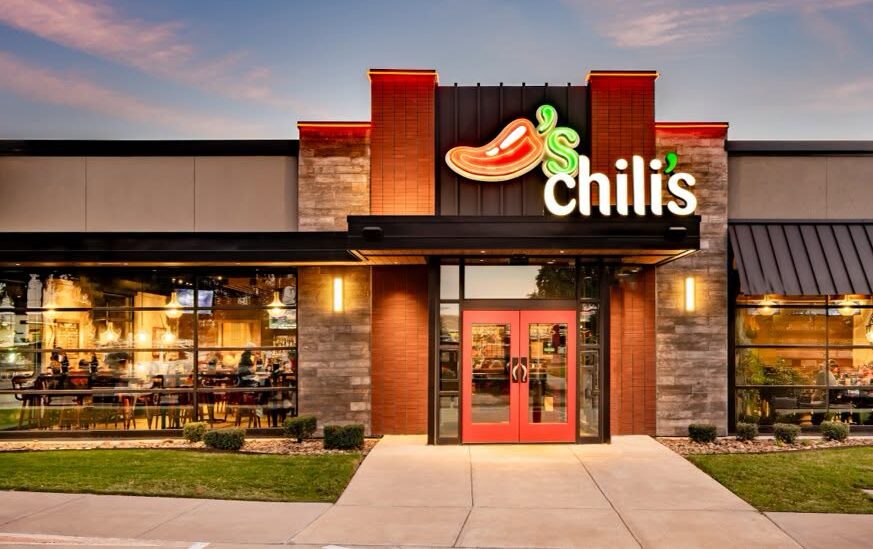
The biggest cumulative same-store-sales narrative in casual dining just circulated across the industry’s editorial gatekeeper class, endorsed by the biggest editorial voices in the trade press, aimed directly at owners, operators, and CEOs with capital in play. Every load-bearing claim in the piece falls apart under a second read. Nobody in the publishing infrastructure ran the second read before publishing. That is not a Chili’s problem. It is not an author problem. It is not a CEO problem. It is the industry’s editorial infrastructure operating as designed, and it is the single largest engine of operator failure the industry does not name.
The Artifact
A recent trade-press feature walked readers through a large casual-dining chain’s five-year comp run — a cumulative same-store-sales number in the seventies, an AUV lift of two million dollars per unit, a “masterclass of operationally shoring up a business before unlocking it.” The piece was authored by the trade-press group’s VP Editorial Director, and it landed in every LinkedIn feed, every investor deck, every leadership Slack, and every strategy call that touched casual dining the week it published.
The piece was consumed the way trade-press features are always consumed — as instruction. Owners forwarded it to leadership teams. Operators pulled specific moves out of it as candidates for their own operations. CEOs referenced it in board conversations. Franchise developers cited it in pitch decks. The consultant layer downstream will build the next twelve months of engagements off it. The vendor layer downstream will sell “chain-modeled loyalty automation” citing it as validation.
The number does not survive an operator’s second read. The moves do not transfer to the operations the piece was aimed at. The production arrangement that manufactured the piece made the causal read impossible for the publishing venue to have performed. Every downstream reader who loaded a move as executable ran a [Case Study Reduction] against an artifact whose author had no capacity to warn them not to.
The Six Structural Markers
The piece is not journalism. It is content that reads like journalism. The distinction is structural, not tonal. Six markers show up in the artifact. All six present.
Single-source narrative. Every quote in the piece traces to the chain’s CEO or CFO. Not one dissenting voice. Not one independent operator asked whether the moves transfer. Not one competitive analyst asked what the number looks like disaggregated. Not one category researcher asked how the recovery baseline factors in. One company. One narrative. One arc.
Advocacy language in the writer’s own voice. “Masterclass.” “Not near the finish line.” “Something we’ll be studying for a while.” “Positively lapped.” “Category-busting results.” Trade press with critical distance uses hedges — “management characterized,” “the company said,” “Chili’s reported” — that put the source at arm’s length. This piece has none. Every claim is stated as fact. Every framing is advocacy.
Third-party validation cited atmospherically. “YouGov third-party data” appears in the piece with no methodology, no cohort definition, no comparison set. “Third-party syndicated data confirms Chili’s won across all fronts” — no publisher named. Any real story cites the source specifically so the reader can go check. Captured editorial does not, because the citation is decoration, not evidence.
No adversarial questions asked or answered. The piece never surfaces the operator-side questions. What percentage of the five-year cumulative is pandemic recovery? Why did AUV lift $500K on a stated 9.2% comp? What is the check-average lift buried in the traffic-comp gap? What did the previously-installed eight-page shift line check cost the operation across the years it was in place? Why is manager turnover ahead of the industry if the culture is transformed? Every one of those questions is basic editor-side work on a real feature. None get raised.
Structural scaffolding matches the source’s earnings-call arc. Same beats, same order, same emphasis. Turnaround narrative, twofold experience-and-value approach, chicken sandwich launch velocity, buzz metric, manager time unlocked, loyalty automation, off-premises upside. This is not a reporter finding a story. This is a reporter walking the company’s already-produced investor narrative from top to bottom with commentary added.
Forward-looking source claims presented without hedge. “At least three years of runway.” “Haven’t even scratched the surface.” “The next big frontier.” A story includes those as CEO characterizations with the appropriate distance. Captured editorial bakes them into the piece’s own voice.
All six markers present. The archetype.
What The Number Actually Was
The five-year cumulative same-store-sales figure was manufactured against a base-year that included the pandemic trough. Two of the five component years were casual-dining category recovery, not chain-specific execution. Every publicly-traded casual-dining brand posted those recovery years. The chain in question did not cause them. Category tailwind produced them.
The differentiated performance shows up in the last two years — the years where the chain outperformed the category on stable bases. That is meaningful. That is real. That is roughly a two-year stacked figure in the mid-to-high thirties. Impressive. Not seventy-plus.
The piece bundles category recovery into the chain-specific number and publishes the combined figure as if the entire delta traced to the current CEO’s playbook. The operator, owner, or CEO reading the piece and thinking “we should run that playbook” is being sold a cumulative that includes performance no operator’s playbook could replicate because the performance was category-wide recovery from a pandemic. The pandemic recovery has already happened. It is not available for the next operator to run at.
That is one nameable mechanism, and it is not new to this piece. The trade press does it consistently on turnaround narratives. Pick the trough as the starting line. Publish the cumulative. Never disaggregate. Never name the base. Let the reader assume the entire delta was the playbook.
What The Moves Actually Were
Everything the chain did well — behind the wall — was architectural recalibration. Stripping out corporate admin scaffolding that had accreted over years. Redirecting manager time from paperwork behind the wall to coaching on the stage. Rebuilding scheduling infrastructure. Attacking cycle-time friction at kitchen prep, KDS routing, host stand throughput. Formalizing an internal cohort of highest-volume operators to source ideas. Pricing profit improvement into operator bonus structure. Running the reimage program as ongoing capital position rather than static asset.
Every one of those is upstream of the numbers. Every one of those is a Production and Admin recalibration executed before the marketing turned on. The CEO says it explicitly in the piece — on one launch, he slowed the marketing team down to “shore up operationally before turning things on.” That single sentence names the architectural sequence and immediately gets buried under the marketing narrative that follows it.
The chain did architecture first. Marketing second. That is the only sequence in which the relational promise the marketing makes can be delivered by the operation the marketing points at. The independent-operator industry-standard sequence is reversed — launch the promotion, launch the loyalty program, launch the redesign, then hope the operation holds. It does not hold. The architecture was not recalibrated. So the relational promise arrives at a Production that cannot deliver it, and every incremental Guest the marketing drove becomes a churned Guest the operation could not hold.
The chain’s article buries the architectural work as operational housekeeping and foregrounds the marketing outputs as the story. Chicken sandwich unit velocity. Baby Back Ribs jingle remake. Cheese-pull virality. YouGov buzz metric. Bombshell Margarita cohort capture. Molten-on-cookies viral response. “Better Than Fast Food” positioning. Ziosk loyalty automation. Every one of those is a downstream artifact of the architecture that produced the operation that could deliver them. None of them transfer to an operation that has not run the architectural recalibration first.
Reader loads the terminal-stage moves. Skips the foundational-stage moves. Runs the top half of the sequence with none of the bottom half in place. The reader’s operation cannot deliver the relational promise the terminal moves make. The relational promise fails at execution. The reader concludes the chain’s playbook does not work, or that their operation is not ready, or that they need to try harder. All three conclusions are wrong. The playbook was never the playbook. The playbook was the architecture. The article never showed them the playbook.
What The Publishing Arrangement Actually Was
The piece was produced under the arrangement that produces most trade-press features on large publicly-traded operators. The publication received access to the CEO in exchange for a piece that walked his narrative arc from top to bottom. The publication receives future exclusives, ad inventory adjacent to the piece, and continuing access to the operator’s IR calendar. The operator receives an editorially-imprimatured version of the earnings-call narrative distributed to owners, operators, and CEOs across the industry.
No line-item payment is required for the arrangement to produce this output. The arrangement’s incentive structure produces the output the operator wants because the venue’s continuing access depends on continuing to produce it. Six adversarial questions in this piece would end the arrangement. The piece contained none. The arrangement continues. The next feature will look the same.
That arrangement is [Editorial Capture]. It is not sponsored content. It does not label itself. It is trade-press editorial produced under access-and-inventory dependencies that make the causal read structurally impossible for the venue to have performed before publishing.
The reader trusts the venue to have run the causal read. The venue’s production arrangement made the causal read impossible. The trust is misplaced by design.
That is the load-bearing failure. Not that the reader is not smart enough. Not that the operator is naive. The failure is that the editorial venue occupies a position of trust the venue’s production arrangement disqualifies it from occupying. Every reader who loads a move as executable from a captured piece is running a Case Study Reduction against an artifact the venue could not have vetted. The vetting layer the reader assumes is doing the work is not doing the work. It cannot do the work. Its access depends on not doing the work.
What The Endorsement Layer Actually Was
The piece did not circulate on its own merit. It circulated because the industry’s editorial-executive class endorsed it. LinkedIn posts from VP Editorial Directors calling it a masterclass. Reshares from franchise-development voices. Comment threads from consulting firms citing it as validation for their next engagement. Every layer of the industry’s editorial infrastructure amplified the piece, and each amplification carried the imprimatur of the amplifier’s editorial position.
The reader who lands on the piece via a VP Editorial Director’s endorsement is running the felt-clarity mechanism before opening the piece. The endorsement did the reduction work upfront. The reader is not reading with critical distance. The reader is reading with the frame the editorial class already installed — that this is a masterclass, that it is instructive, that the chain’s moves transfer, that the reader should be studying it. Every one of those pre-frames is a [Case Study Reduction] planted before the piece is read.
The consensus of the editorial class is not evidence that the piece is correct. It is evidence that the arrangement is functioning. Every voice in the endorsement layer operates under some version of the same access-and-inventory dependencies the original venue operates under. Endorsing the piece maintains the endorser’s position inside the arrangement. Not endorsing the piece — or worse, questioning it publicly — jeopardizes it. The endorsement layer is not reading the piece critically. The endorsement layer is participating in the arrangement.
Which is why the who’s-who agrees. Not because they read the piece and found it compelling. Because the arrangement that produced the piece is the arrangement that produces most of the retrospective-narrative content the industry consumes, and every participant in that arrangement is downstream of it.
What Changes Monday Morning
The owner, operator, or CEO reading this piece has a Monday-morning move. It is not “run the chain’s playbook.” It is not “run the opposite of the chain’s playbook.” It is architectural.
Before absorbing any trade-press feature on a large operator as instructive material, run the six-marker check. Single-source narrative. Advocacy language in the writer’s voice. Third-party validation cited atmospherically. No adversarial questions surfaced. Structural scaffolding matching the source’s earnings-call arc. Forward-looking source claims presented without hedge. Four or more markers present, the piece is [Editorial Capture]. Consume it accordingly — as brand marketing distributed through the editorial channel, not as feature journalism vetted for causal transferability.
Second Monday-morning move: for any move surfaced by a captured piece that felt executable, run the architectural pre-check. What conditions in the source operation shaped the move? What is the base-year of any comp cited? What is the sequence in which the source operation ran the move — was it architectural first and marketing second, or was the architectural work already in place and only the marketing move is being surfaced? Does your operation share the substrate the move ran on top of? If any answer is no, the move does not transfer without architectural work you have not done. Log the move, drop it, do not run it forward.
Third Monday-morning move: name the arrangement. Not accusatorily. Structurally. Every editorial venue that covers your industry’s largest players operates under some version of access-and-inventory dependency. Some venues resist harder than others. Some don’t resist at all. Learning to read the arrangement is now part of your operator’s read. It is not optional. It is the diagnostic layer above the artifact.
The Frame Going Forward
The industry’s editorial infrastructure is not producing content that survives an operator’s causal read. It is producing content that survives its own production arrangement. Those are not the same standard. The operator who trusts the first has never named the second. Once the second is named, every artifact from the first is a candidate for the six-marker check, and every load-bearing move surfaced by such artifacts becomes a candidate for the architectural pre-check before it enters the operator’s execution queue.
There is no shortcut around the causal read. The captured piece is not the shortcut. The captured piece is the mechanism that makes the operator believe a shortcut exists. Naming [Editorial Capture] closes that mechanism. Naming [Case Study Reduction] closes what happens when the mechanism lands. Naming [Hacksterism] closes the posture that reaches for the artifact in the first place.
Three named failures. One integrated diagnostic. One operator’s read discipline that closes them together. That is the architecture the industry’s editorial infrastructure has spent the last decade dismantling on your behalf, and the piece that circulated last week is the archetypal specimen of the dismantling in action.
The seventy-plus percent cumulative same-store-sales run may or may not be genuine chain-specific outperformance once disaggregated. It is not the point. The point is that the entire industry consumed the number without disaggregating it, and the venue that produced the number had no capacity to disaggregate it, and the endorsement layer that amplified the number is structurally invested in not disaggregating it. Your operation is being asked to make capital-allocation and execution decisions against a number that the production layer, the publication layer, and the endorsement layer are all incentivized not to check.
Check it yourself. That is now the operator’s job. Nobody upstream is going to do it.
Digging Deeper
Positions on the record:
- Case Study Reduction — https://jeffreysummers.com/case-study-reduction/
- The Case Study Is A Hack — https://hacksterism.com/the-case-study-is-a-hack/
Term definitions from the Knowledge Base:
- [Editorial Capture] — https://kb.jeffreysummers.com/dictionary/editorial-capture/ (pending lock)
- [Case Study Reduction] — https://kb.jeffreysummers.com/dictionary/case-study-reduction/
- [Hacksterism] — https://kb.jeffreysummers.com/dictionary/hacksterism/
- [The Operator’s Read] — https://kb.jeffreysummers.com/dictionary/the-operators-read/
- [Causal Read] — https://kb.jeffreysummers.com/dictionary/causal-read/
- [By Design Or By Default] — https://kb.jeffreysummers.com/dictionary/by-design-or-by-default/
Sources
- How Chili’s Plans to Remain ‘America’s Hottest Restaurant Brand’ — QSR/FSR Magazines feature, August 13 2026
- LinkedIn endorsement post from the trade-press group’s VP Editorial Director — LinkedIn, August 2026