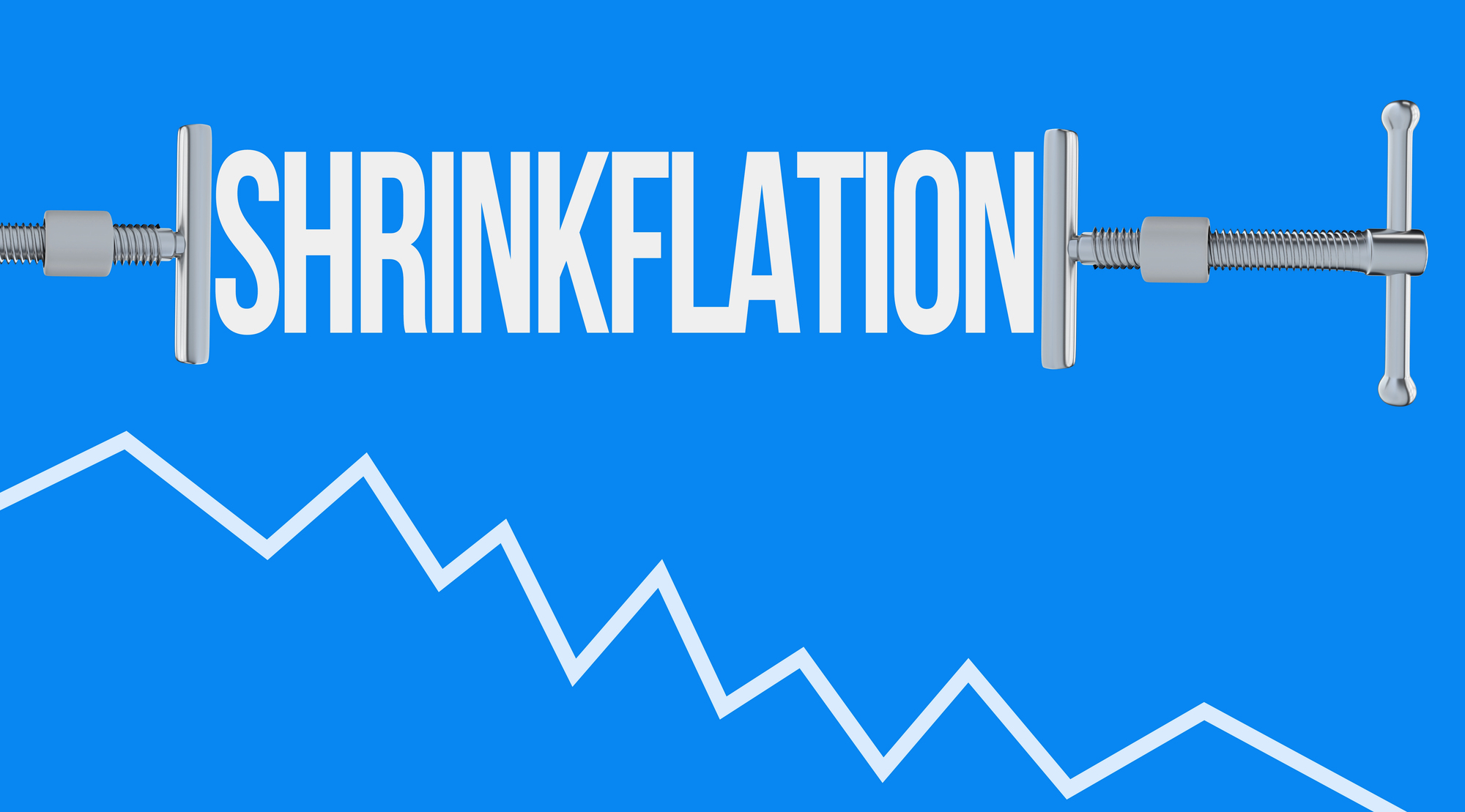
The pricing-strategy literature has decided shrinkflation is a legitimate administered-pricing move. Reduce the volume, hold the printed price, preserve the “symbolic price equity” the brand has built. Recent work in the field frames it as a virtue — the operator is protecting an asset. The pricing consultant layer is teaching it as a competency. The vendor layer is selling instruments that quantify how much shrink the operator can absorb before the Guest logs the breach. The whole apparatus is manufacturing consent for a specific covenant violation and calling it strategy.
It is not strategy. It is a unilateral term-change against a covenant the Guest never voted on and is silently measuring against everything the operation does. Every ounce removed from an AriZona Big Can while the 99-cent price prints on the label is a breach. Every gram reduced in a Costco rotisserie chicken while the $4.99 sticker holds is a breach. Every trimmed portion in an independent operator’s plate while the menu number holds steady is a breach. The pricing literature calls this protecting the reference price. My framework calls it what it is: [Consent Erosion] operating through the pricing lane with the operator’s full knowledge and the pricing-strategy establishment’s endorsement.
The Frame The Industry Is Running
Shrinkflation appears in the current pricing literature under the rubric of “administered pricing at its virtuous best.” The reasoning runs like this. A brand has built up recognition value at a specific price level over compounded time. That price level has become a load-bearing signal to the customer — the AriZona 99-cent can, the Costco rotisserie chicken, the McDonald’s Big Mac at whatever anchor the market is currently holding it to. Changing the price would destroy the recognition value. But input costs rise. The brand needs to protect margin. The obvious solution: hold the printed price constant, shrink the delivery underneath. The customer keeps the reference price they recognize. The brand keeps the margin. Everybody wins.
This is the story the pricing literature tells. Every clause in the story is technically defensible on its own terms. The recognition value is real. The margin pressure is real. The alternative — raising the printed price — is real too, and it does destroy the recognition value in a specific measurable way. If the choice is only between two options — raise the price and destroy the equity, or hold the price and shrink the delivery — then shrinkflation looks like the sound administered-pricing move.
The pricing literature is running a two-option choice architecture on a decision that has more than two options in it. That is the first breach. The second is the framing of the recognition value itself. The pricing literature calls it symbolic price equity and treats it as a brand asset the brand built and now owns. The [Guest Contract] frame reads the same asset differently — the price level is not something the brand built and owns. It is a covenant the Guest is holding the brand to. The brand entered into the covenant the moment the price stabilized. The Guest is measuring the covenant every visit. The pricing literature has the ownership backwards. The equity is on the Guest’s side of the ledger, not the brand’s, and shrinkflation moves it unilaterally onto the brand’s side without the Guest’s consent.
What The Guest Is Actually Measuring
Guests do not measure printed prices in isolation. Guests measure the entire transaction — the number on the label, the volume in the container, the quality of the delivery, the felt value at the moment of consumption. Every one of those inputs is part of the covenant. The pricing-strategy literature isolates the printed price as the equity carrier and treats everything else as adjustment terrain. This is a category error. The Guest holds all four inputs together as a single covenant term at that specific price.
When AriZona removes an ounce from the Big Can while the label still prints 99 cents, the Guest is not experiencing “preserved symbolic price equity.” The Guest is experiencing a covenant that has shifted. The specific shift may not surface as a conscious complaint. The shift always surfaces as a felt read. Some percentage of the Guest base is running a comparison against the previous purchase — the can is lighter, the pour is shorter, the tea is slightly less. Some percentage is reading the media coverage about shrinkflation and now checking their own purchases. Some percentage is receiving no conscious signal and is instead adjusting their frequency, their substitution behavior, or their willingness to defend the brand to peers.
Every one of those Guest reads is happening. The pricing literature does not measure them because the pricing literature is measuring the brand’s asset, not the Guest’s covenant. The brand’s KPIs — margin, gross profit, price-level stability, “buzz score,” reference-price maintenance — all show green under shrinkflation. The Guest’s covenant reads — willingness to recommend, substitution latency, frequency curve, felt-value gap between purchase and consumption — all move quietly in the wrong direction. The lag between the KPI reads and the covenant reads is what makes shrinkflation look like strategy in-quarter and covenant collapse over compound time.
The Diagnostic Six Markers
Shrinkflation as executed in the current industry follows a specific pattern. The markers are consistent enough across the AriZona, Costco, McDonald’s, packaged-goods, and restaurant-portion instances to constitute a diagnostic surface.
Marker one. The printed price is held sacred while every other delivery variable becomes negotiable. The operator’s decision architecture prioritizes the price number over the volume, quality, ingredients, portion, or experience. This priority-inversion is the entry-point for the breach. Once the price becomes the fixed variable and everything else becomes adjustable, the covenant has already shifted from an integrated Guest transaction to a printed-price artifact the operator is protecting for its own asset value.
Marker two. The reduction is executed silently. No packaging communication, no menu note, no server disclosure, no honest signal to the Guest that the covenant has moved. The pricing literature endorses this silence as necessary — communicating the reduction would destroy the recognition value the reduction is designed to preserve. The framework reads the silence as evidence of covenant awareness. The operator knows the Guest would object if informed. The operator is running the move despite that knowledge. That is not administered pricing. That is administered concealment.
Marker three. The rationale is framed internally as consumer research. The operator’s team runs studies to determine “how much shrink the customer will tolerate” before conscious detection. The output of the study is treated as the operator’s operating parameter. This inverts the covenant. The Guest’s tolerance for undetected breaches becomes the input to the operator’s move. The operator’s own commitment to the covenant is not consulted. The Guest’s not-yet-noticed status is the license to breach.
Marker four. Post-hoc rationalization takes the form of brand narrative. AriZona’s own communication treats the 99-cent price as “a badge of honor” and frames the ongoing holding of that price as brand character. The framing is analytically true — the held price is part of the brand character. The framing is also a diversion from the volume reduction underneath. The brand-character narrative directs Guest attention to the sustained printed price. The volume reduction stays in the peripheral vision.
Marker five. The move is defended as customer-friendly. The pricing literature and the brand communications both frame shrinkflation as protecting the customer from the alternative — a price increase. This defense treats the Guest as incapable of preferring the honest alternative. The Guest is not being protected. The Guest is being decided-for. The covenant permitted a price increase in exchange for continued volume and quality. The operator chose to breach silently instead of renegotiating openly.
Marker six. The move compounds across the category. Once one operator in a competitive set runs shrinkflation successfully, the pricing consultant layer distributes the case study. The next operator runs the same move. Then the next. The Guest is now facing a category where every operator has silently shifted covenant terms simultaneously. The Guest’s ability to substitute their way to a covenant-honoring operator collapses because no covenant-honoring operator remains. The category has collectively breached and the Guest has no exit. This is the pricing literature’s endgame: an industry-wide covenant reset the pricing consultant layer has manufactured and no individual Guest can undo.
All six markers present in the AriZona case, the Costco case, the packaged-goods case, and every restaurant portion-shrink case my framework has diagnosed over the last decade. The pattern is not incidental. The pattern is the pricing literature’s manufactured consent operating at scale.
What Would Not Be A Breach
The critique is not that operators can never adjust delivery. Operations must adjust delivery over time. Costs shift, sourcing changes, supply constraints emerge, quality inputs vary by season. The [Guest Contract] does not require operators to freeze delivery in place any more than it requires operators to freeze prices in place. The covenant requires only that adjustments be run through the covenant’s terms — visibly, honestly, and with the Guest as a party to the adjustment rather than a subject of it.
Three specific non-breach moves an operator can run when input costs rise:
The honest price increase. Raise the printed price. Communicate the reason. Accept the loss of some Guests at the higher covenant level and hold the delivery unchanged for the Guests who remain. The pricing literature calls this “destroying symbolic price equity.” My framework calls it renegotiating the covenant in good faith. The Guest is now paying more and receiving the same volume, quality, and experience at the same relative value. The covenant survives. Some Guests exit because the new covenant terms exceed their willingness to pay. That exit is honest. It is not a breach. It is the covenant working correctly.
The visible volume adjustment. Reduce the volume. Communicate the reduction on the package, in the menu note, or through the server script. Frame the reduction as a specific response to a specific input pressure the operator has decided not to pass through as a price increase. This is a covenant term-change proposed to the Guest openly and accepted or refused openly. Some Guests will accept the smaller portion at the held price. Some will refuse it and exit. That refusal is honest. The operator has not breached the covenant. The operator has proposed new terms and let the Guest decide.
The offer restructuring. Change the offer entirely — different item, different positioning, different price point — so the Guest is not comparing the new offer against the covenant terms attached to the old offer. This is a covenant termination and re-formation, not a covenant breach. The Guest reads it as a new deal and decides on new terms.
Every one of those moves is available to every operator every day. The pricing-strategy literature is running silent shrinkflation not because the alternatives are unavailable but because the alternatives require the operator to acknowledge the Guest as a party to the covenant. Silent shrinkflation lets the operator retain the appearance of the old covenant while collecting the economics of the new one. That is the specific breach. Nothing about it is administered pricing at its virtuous best. It is administered concealment at the industry’s collective convenience.
The Instrument Layer
The pricing consultant industry and the pricing SaaS industry have built an entire vendor stack around this breach. Menu engineering tools that identify how much portion can be trimmed from each menu item before Guest detection. Packaging-analytics vendors that model consumer perception thresholds for volume reductions. Case-study libraries distributed by the pricing consultant layer showing how successful operators have “protected reference prices” through delivery adjustments. Every one of these instruments is a Hacksterism artifact selling covenant-breach technology as pricing strategy.
The instrument layer’s role is critical. Without it, individual operators would have to design the breach themselves and would face the covenant-awareness moment as they did so. The instrument layer externalizes the design decision. The operator can now buy the breach-execution mechanism from a vendor whose entire value proposition is “we have already run the ethics through for you.” The vendor’s case studies show that Guests did not detect the reduction. The vendor’s threshold models show the operator how much they can safely take. The vendor’s competitive intelligence shows that peers are running the same move. The operator does not have to run the covenant-awareness moment because the vendor has manufactured the sense that the covenant question is already settled.
It is not settled. The vendor cannot settle the covenant question because the covenant is between the operator and the Guest, not between the operator and the vendor. Every instrument sold to execute silent shrinkflation is a tool for the operator to breach the covenant on someone else’s authority. The authority is fake. The breach is real. The Guest is measuring the operator regardless of which vendor’s dashboard the operator was reading when they ran the move.
The Compounding Read
Silent shrinkflation runs in-quarter as margin protection. Nothing about it looks like damage on the P&L for the first two to four quarters. This is why the pricing literature can defend it and the pricing consultant layer can sell it. The KPIs the operator watches are all cooperating. The number that would surface the damage — the compound Guest Contract read — is not on any dashboard the operator’s team is running.
The damage shows up over compound time as substitution behavior, frequency compression, referral collapse, defense-of-brand collapse, and long-tail volume erosion that the operator eventually attributes to macro conditions, competitor moves, or category headwinds. Every one of those attributions is a diversion from the actual mechanism. The operator ran silent term-changes against the covenant across multiple quarters. The Guest logged the changes across those quarters. The Guest adjusted the covenant on their side of the ledger. By the time the Guest’s adjustments show up in the operator’s data, the operator has forgotten they made the changes and now reads the erosion as external.
This is the specific compounding failure mode. Shrinkflation does not fail in-quarter, which is why the pricing literature treats it as strategy. Shrinkflation fails over compound time, which is where the [Guest Contract] does its measuring. The operator who has run shrinkflation across four straight quarters and is now three quarters into inexplicable frequency compression is experiencing the covenant returning the bill. The bill is not addressed to the specific breach that started the cycle because the operator did not label the breach when they made it. The bill is addressed to the operation, and the operation pays it in Guest count, in check average erosion, and eventually in category-adjacent premium loss.
What The Independent Operator Should Do Instead
Every operator faces the same input-cost pressure the pricing literature is teaching operators to shrinkflate against. The independent operator faces it with fewer instruments and more direct Guest visibility. That combination is not a disadvantage. It is the correct architecture for running the covenant honestly.
Name the input pressure openly. Not on the menu. Not in a marketing campaign. In the operator’s own decision architecture and, where appropriate, in specific Guest-facing conversations. The operator is deciding how to respond to the pressure. The operator is not obligated to pass through, absorb, or shrinkflate as automatic defaults. The operator is obligated to run the [Demand-Side Pricing] read and decide by design.
Choose the covenant-honoring response. If the covenant permits a price increase, raise the price honestly. If the covenant permits a volume adjustment, adjust visibly. If neither, absorb the pressure into margin and log the trade-off. If the pressure is truly unsupportable, restructure the offer rather than breach the covenant on the existing one.
Refuse the pricing consultant frame that positions shrinkflation as a legitimate move. The frame is analytically defensible and covenant-illiterate. The vendor selling you the breach-execution mechanism is not the party to the covenant. The Guest is. The vendor’s endorsement is not admissible against the Guest’s measurement.
Run the compound read on your own operation. Look at any load-bearing menu item where the price has held stable for over two years. Ask whether the delivery underneath has held stable across that same window. Portion. Quality. Preparation care. Temperature at the pass. Consistency of the plate. Consistency of the service. If any of those has drifted while the price held, the covenant has been silently rewritten and the Guest is measuring the new terms. Decide whether to restore the delivery, honestly renegotiate the price, or acknowledge that the covenant on that item has already broken and rebuild it deliberately.
The Frame Going Forward
Shrinkflation is not administered pricing at its virtuous best. Shrinkflation is administered concealment at the industry’s collective convenience. The pricing-strategy literature has manufactured consent for a specific covenant violation by framing it as brand-preservation strategy. The pricing consultant layer has sold the execution mechanism as sound managerial discipline. The vendor stack has monetized the breach at every layer. The Guest has no seat at any of these tables.
The independent restaurant operator has an alternative and it is not diminished by the absence of a corporate pricing department. The alternative is running the covenant honestly, at every price on every menu, over the compound time the Guest actually measures against. The alternative is refusing the vendor frame that shrinkflation is a sound move. The alternative is treating every load-bearing price as a covenant term the operator entered into on the Guest’s authority and can adjust only through honest renegotiation with the Guest as a party to the change.
The pricing-strategy literature will keep teaching the breach as strategy. The pricing consultant layer will keep selling the execution. The vendor stack will keep monetizing the concealment. Meanwhile, the operator who is running the covenant honestly — through open price adjustments, visible volume changes, or absorbed input pressure with the trade-off logged — is building the one asset the entire pricing-strategy apparatus cannot manufacture: a Guest who has measured the operation across compound time and found the covenant intact.
That Guest is worth more than every “symbolic price equity” the pricing literature has ever defended. The pricing literature will not tell you this. My framework does.
Digging Deeper
Positions on the record:
- The Terms Changed. Did Anyone Ask? — https://jeffreysummers.com/the-terms-changed-did-anyone-ask/
- Consent Erosion — https://jeffreysummers.com/consent-erosion/
- Why “Too Expensive” Is Never About The Price — https://jeffreysummers.com/why-too-expensive-is-never-about-the-price/
- A Mediocre Guest Experience Is the Cement, Not the Platform — https://jeffreysummers.com/a-mediocre-guest-experience-is-the-cement/
Term definitions from the Knowledge Base:
- [Guest Contract] — https://kb.jeffreysummers.com/dictionary/the-guest-contract/
- [Consent Erosion] — https://kb.jeffreysummers.com/dictionary/consent-erosion/
- [Hacksterism] — https://kb.jeffreysummers.com/dictionary/hacksterism/
- [Case Study Reduction] — https://kb.jeffreysummers.com/dictionary/case-study-reduction/
- [By Design Or By Default] — https://kb.jeffreysummers.com/dictionary/by-design-or-by-default/
- [Symbolic Price Equity] — https://kb.jeffreysummers.com/dictionary/symbolic-price-equity/ (pending lock)
Sources
- What Gardiner Means’s (1935) Administered Prices Concept Teaches Today’s Pricing Strategists — Utpal Dholakia, The Pricing Conundrum Substack, August 8, 2026
- Why is AriZona Tea Still 99¢ — AriZona Beverage Company brand communication
- Costco Rotisserie Chicken pricing history — public reporting on Costco’s held $4.99 price point